

Death, Displacement, Documentation
Another learning reflection on the persistence, resilience, and creativity of Canadians of African descent

“In every historical moment, a new identity emerges.
We need to preserve their shapes and evolutions over time.”
– Andrea Fatona
This year marks 30 years of Black History Month in Canada; I wrote a little bit about the antecedent, Dr. Jean Augustine, in my earlier reflection. That last learning reflection rested on the assertion that we have been here. This is the same assertion that guides the curatorial work of Andrea Fatona, independent curator and associate professor at OCAD University. Last night, I attended a lecture and conversation between Andrea Fatona and Dr. Joana Joachim, assistant professor at Concordia University, about how Black creators in Canada are Making Our Way in the industry. Many of themes I uncovered in my first learning reflection were raised again in the lecture.
This article offers my learning reflection on the Making Our Way lecture. This writing documents the occurrence of the lecture and audience presence, while also extending learnings during Black History month. I will introduce the curatorial practice and research findings of Andrea Fatona before sharing her recommendations on potential paths forward.
Enjoy my writing and research? Consider showing your support with a small token of appreciation. Consider it my reparations. 😜
My Substack is 100% reader-supported. If you are following me but not yet subscribed—why not now?
Making Our Way
Black creators in Canada work underneath and through violent circumstances. Nonetheless, our works remain imaginative, playful, and uncontestable.
We are here. We have been here. We will be here. Let me show you how.
Fatona’s curatorial and research practices are concerned with creating spaces of engagement for Black cultural producers in Canada. She is well known for work documenting Black community life in Vancouver’s Hogan’s Alley (1994), alongside Cornelia Wyngaarden; founding the Artist-run Centre model in Canada; and curating group exhibitions like Practice as Ritual | Ritual as Practice (2022), which brought artists responsible for the first national exhibition (1989) addressing the exclusion of Black women from Canada’s visual landscape back together. Fatona uses collaboration, relationality, and space-making techniques to explore (and showcase) the material realities of being Black in Canada.
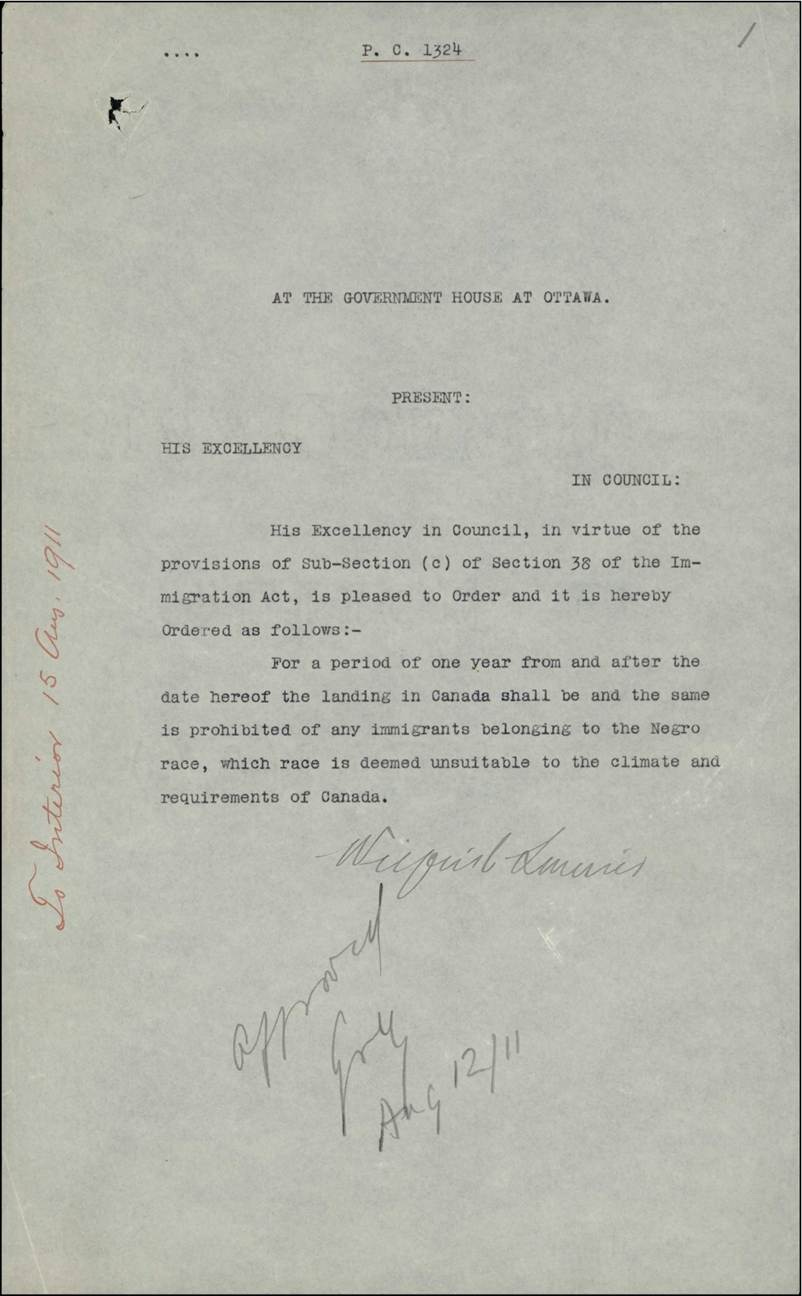
Black bodies in Canada must contend with a difficult reality: Canada, as a nation-state, is predicated on exclusion. For example, Fatona shared a 1911 Order-in-Council, signed by Prime Minister Wilfrid Laurier, that attempted to block the settlement of Black Oklahomans who were experiencing particularly devastating cruelties at the time. This is one example of diplomatic efforts to exclude Black people (along with their stories, cultures, and identities) from the Canadian project. Fatona observed that Black bodies in Canada are over-policed, disavowed, and always out-of-place on Canadian territory.
The recurrent themes in Fatona’s work reflect this; Black Canadians have been transforming themselves through relations and persisting as a result. Our cultural works reference Black diaspora—the movement, migration, and displacement that initiated contemporary communities. Following this, the theme of contested geographies references the invisibility and commodification of Black culture in Canada. Making space is how cultural producers respond to their circumstances and overcome barriers. We create metaphysical spaces for the living and the dead to contemplate the survivance of Black culture and Black futures.
The Making History: Visual Arts and Blackness in Canada (2023) anthology included a chapter by Andrea Fatona, “Digging Us: Making Visible Black Canadian Narratives.” Following on this work, both Fatona and Joachim emphasized the importance of documentation and archival work as a form of making space. Black presence in Canada is being systematically erased; Black Canadians experience ongoing violence against their physical and metaphysical beings. Fatona and Joachim believe we can use documentation as memory, to support Black creators from within their communities, and to uncover embodied histories (our material realities). On this foundation, we can then improve the discoverability, visibility, and accessibility of Black Canadians’ artistic work and creative practices.
So, how might we make our way (through violence and erasure) while imagining liberatory futures?
It is important for Black Canadians to imagine how our liberation looks and feels before it arrives. Will we be ready to receive it? Fatona asked audience members to “Remember a future.”
Our work is constant, ongoing, unfinished business. To persist and resist, we must develop tools for new ways of doing and design for necessity (survival). We must create fugitive spaces that focus on material practices of care.
Different identities and histories come with different responsibilities. Being Black in Canada, we have a responsibility for preventing the profound acts of violence and dehumanization done to our ancestors. This starts by taking control of our lineages and baring witness to the presence of Blackness in Canada.
Happy Black History Month. #30.